
Goose Control in North Augusta, SC
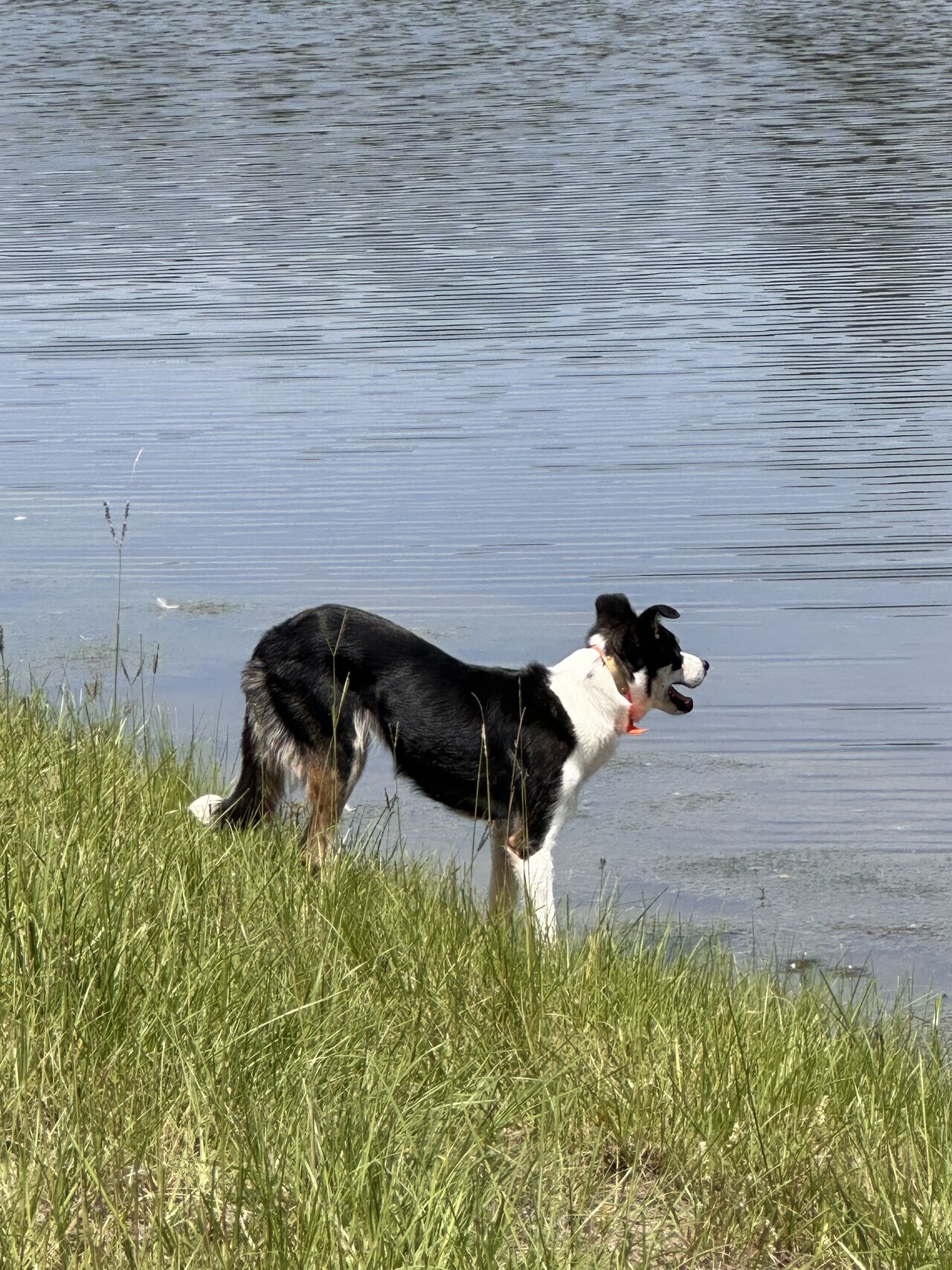
North Augusta bans feeding waterfowl in its parks and on public land, and that ordinance is only half of an answer. Coastal K-9 & Pest Solutions works trained herding dogs at resident Canada geese on ponds, club turf and trail edges here, then rebuilds the waterline so the ground stops inviting the flock back.
Plenty of towns have opinions about geese. North Augusta put one in its code. On 17 May 2010 the council adopted Ordinance No. 2010-08, adding Article IV to Chapter 5 and making it unlawful to feed wild animals or waterfowl in city parks and on public land. The code’s definition of waterfowl names ducks, geese, swans, heron and egrets.
That ordinance is genuinely useful local policy, and narrower than almost everyone assumes. It does not reach a private pond behind a subdivision entrance, it carries an explicit exemption for the work described on this page, and on its own it will not persuade an established flock to live elsewhere.
What does North Augusta’s feeding ordinance actually say?
It is short, specific, and worth reading before anyone spends money here.
- The stated purpose (§ 5-50). The council found that feeding wild animals and waterfowl is “both detrimental to the animals and causes a public health nuisance and safety hazard that is detrimental to the health and general welfare of the public.”
- The prohibition (§ 5-51(a)). “No person shall purposely or knowingly feed, bait, or in any manner provide access to food to any wild animal or waterfowl within city parks, or on other publicly owned lands in the city.” Note “provide access to food” — broader than handing out bread.
- The definitions (§ 5-1). Waterfowl means “ducks, geese, swans, heron, and egrets.” Wild animal is a longer list covering coyotes, deer, foxes, raccoons, skunks, alligators and turtles, with waterfowl folded in again.
- The exemption (§ 5-51(b)). The article does not apply to agents of the city, the State of South Carolina, a federal agency, “or nuisance wildlife control officers lawfully engaged in a wildlife or waterfowl management program.” A carve-out for professional management sits inside the ban.
- Enforcement (§ 5-52). Animal control officers, code compliance officers and all public safety officers hold full power and authority to enforce it.
- Repetition counts (§ 5-53). “A separate offense shall be deemed committed on each day or part of each during which a violation occurs or continues.” Daily feeding is daily exposure.
One limit on our reading. Section 5-53 routes penalties to section 1-8, which we have not read, so we quote no dollar figure for an Article IV violation. Article I of the same chapter carries a misdemeanor of up to $500 or thirty days.
Does the ordinance cover a private HOA pond?
No, and this is the most misread thing about it. Section 5-51 applies within city parks and on other publicly owned lands. A retention basin behind a development, a lake inside a gated neighborhood, water on club property — none of that is public land, and feeding geese there is not what the article prohibits. Boards sometimes arrive believing the city already solved this. It removed the public-land half of the food supply and handed private owners a precedent worth borrowing.
Subsection (b) deserves a plain reading too. North Augusta anticipated that licensed operators would run waterfowl programs on city ground, and made sure the feeding ban could not be turned against them. It is not a permit and authorizes nothing by itself. It shows the council was thinking about management rather than only about bread.
Why does a feeding ban rarely move a settled flock?
Because handouts are the least important thing on the menu. Canada geese graze, and most of what a resident bird eats is grass that has been irrigated, fertilized and cut short — exactly what an association pays a contractor to produce every week. End every bag of bread in the city and acres of high-protein forage remain. Handouts concentrate birds where people stand, so the ordinance earns its place, but they are not why a flock chose the site.
Enforcement is the second half. A prohibition works when somebody acts on it, and we found no published record of how often this article has been enforced here. We will not invent a figure to sharpen the point. What the work shows is that one committed household can hold a flock against everything else a board tries.
The lever that depends on nobody’s compliance is the shape of the ground. Our parent page on Canada goose management sets out the method, and the species account is in our Canada goose profile.
Which North Augusta ground has the shape geese select?
What follows is geometry, not an accusation. No published source names a North Augusta water body with a goose problem, the city’s stormwater GIS layer is token-protected, and no inventory of retention ponds exists. These are places whose recorded form matches what resident geese select.
The Lakes and Streams villages
The city’s plat GIS records a master subdivision called Lakes and Streams, divided into villages named for birds and water: Swan Lake Village, Robin Lake, Redbird Lake and Dove Lake Villages, Bluebird Lake Village, Hummingbird Lake Estates, Lake Point Village, Canary Village, Meadowlark Village. Whether these are natural ponds or engineered impoundments is stated in no source we could reach, and we will not guess. But lots facing water across mown ground is the arrangement geese respond to.
Crystal Lake and the trail past it
Crystal Lake is verified three ways: a subdivision plat under that name, another as Rivermist Villas at Crystal Lake, and the Parks department’s description of the Greeneway’s 1.5-mile riverfront extension winding through the Crystal Lake area to the Savannah River. A named lake with a paved public path past it is where a private goose problem turns public.
The River Golf Club
The city’s Greeneway page puts the trail’s eastern terminus off Riverside Boulevard near The River Golf Club, and the plat GIS carries The River Club, its phases, and The Landing at River Club. It is the only golf facility we could verify inside the city, and nothing about its water features is verifiable, so we will not describe them.
The Savannah River frontage
North Augusta sits on the north bank opposite Augusta, Georgia. Riverside Village and the city-owned SRP Park, opened 12 April 2018 and seating 4,782, put a large public gathering ground on that river edge. Bank, mown lawn and hard walking surface in sequence is a loafing pattern.
Riverview Park
The Greeneway’s midpoint access is at 101 Riverview Park Drive, beside the Riverview Park Activities Center. Broad mown athletic fields with parking and paths deliver grazing and sightlines together, and turf kept in playing condition is exactly the sward geese prefer.
What has no local counterpart
There is no college campus here. Every institution on the city’s own education page — Aiken Technical College, USC Aiken, Augusta University, Augusta Technical Institute, Paine College — sits in Graniteville, Aiken or across the river, so the campus-pond version of this problem does not arise. Neither does Butler Creek: USGS gauges place it in Richmond County, Georgia. Butler Avenue and Butlers Mill here are unrelated South Carolina names, and Savannah Rapids Park is in Columbia County, Georgia.
Is there a goose count for this city?
No. Nobody has published one, and we will not manufacture a figure to make a page look authoritative.
Statewide, SCDNR estimates more than 50,000 resident Canada geese and describes the population as increasing. The agency places the heaviest concentrations in the Upper Coastal Plain, the Piedmont and the Foothills. North Augusta sits at the Fall Line on the Savannah River, at the upper edge of the Coastal Plain, so the state distribution points this way. That is an inference from a sourced statewide number, labelled as one.
The word carrying the weight is resident. These birds hatch, pair, nest and winter within the same few hundred acres, and they will not solve your problem by leaving in March. The AIKEN 4 NE station, the nearest published normals, records 232 freeze-free days. Nothing there pressures a bird to go anywhere.
What does the border collie do, and how long does it take?
It communicates threat and nothing else. A collie worked on waterfowl carries the posture of a predator before a hunt: head below the shoulders, body low, eyes locked, moving in an arc. Geese are prey animals with sharp vision and long memories for danger, and they read that shape instantly.
No bird is caught. The dog is not trained to and not permitted to, and a handler who allows contact has turned lawful harassment into a federal problem involving a protected species. The handler’s judgment about where birds are being pushed matters more than the dog work does.
Timing is where expectations go wrong. Geese hold a daily routine, and one visit interrupts a single instance of it. The birds return next morning and the manager concludes dogs are theater. Behavior changes through repetition across weeks, at hours the flock cannot predict, until the site stops being reliable. Frequency in the opening fortnight decides the outcome.
We also will not claim geese never habituate to a dog. That overstatement is everywhere in this trade. A live predator carries real consequence in a way an object on a post never does, so decay is far slower — but slower is not never, and the window it buys is meant to be spent on the ground.
Which deterrents underperform when sold alone?
Nearly all, for one reason: a goose is long-lived, social and constantly assessing risk, so any stimulus that never produces a consequence is eventually filed as furniture.
| Method | Typical effect | Where it breaks down |
|---|---|---|
| Predator decoy on the bank | Days to a few weeks of avoidance | It has never once moved toward a bird. By the second month geese graze beside it. |
| Mylar tape, flags and spinners | A startle response in bright, breezy weather | Random and harmless, so the birds stop attending to it. |
| Sonic and propane devices | Clears open turf for minutes per report | Regular intervals teach the schedule, and in a subdivision the complaints outrun the results. |
| Chemical turf repellent | Less grazing on treated grass while it lasts | Needs reapplying after rain and mowing, and does nothing about loafing or droppings on pavement. |
| Feeding ban with nothing else | Correct policy, minimal movement | Removes a supplement, not the forage. The birds are eating your lawn, and a sign has never mown anything. |
| Dog work plus a rebuilt waterline | Moves the flock now, removes the reason it came | The dog effect needs maintenance visits. The habitat change is the part that never needs repeating. |
None of these are scams, and rotation between methods slows habituation. The failure is buying one alone against a flock that has decided it lives there.
What has to change about the waterline itself?
Three things bring a goose to a piece of ground: grass short enough to graze, a clear view all round, and water within a few strides. Remove two and the site stops competing.
- Stop mowing the last band before the water. An unmown strip of grass and native planting removes the grazing surface and blocks the walk-out at once. It is the highest-value change available, and it costs less than any device because it is work you stop doing.
- Interrupt the view. Grouped shrubs, ornamental grasses and staggered small trees turn one open panorama into compartments. A flock that cannot post a lookout treats the ground as risky.
- Make the bank harder to climb. A gentle grass slope into water is a ramp built for waterfowl. Steepening the grade, or facing the margin with stone, removes the easy exit.
- Cut the inputs nearest the pond. The most attractive forage on a property is usually the last stretch of irrigated, fertilized turf before the water. Less nitrogen there lowers the protein value.
- Write the feeding rule for your own ground. The city’s ordinance stops at the public land line. If your pond is private the rule has to be yours, and the municipal text has been a working model since 2010.
- Decide about the view honestly. Manicured lawn running to still water is the most goose-friendly landscape anyone can build. A community can keep that picture or a clean shoreline, and boards that refuse to choose pay for visits indefinitely.
If the trouble is birds on the buildings rather than the grass — a clubhouse roof, a ledge above an entry — that is bird exclusion, covered further on our North Augusta bird control page.
Where does federal law draw the line?
Under the Migratory Bird Treaty Act the Canada goose is a protected species, listed by name at 50 CFR 10.13. That protection is substantive. What it forbids is take — killing, capturing, possessing, or interfering with nests and eggs. Moving a bird along is not take. Under 50 CFR 21.100 no permit is needed “merely to scare or herd depredating migratory birds,” and a dog that makes no contact sits inside that. The boundaries follow.
- Nests and eggs sit under a separate regulation. Destroying, oiling or addling them falls under 50 CFR 21.162 and needs federal registration or authorization. A vendor offering to quietly deal with a nest is handing you a liability.
- The general depredation order does not apply. 50 CFR 21.150 covers blackbirds, cowbirds, crows, grackles and magpies. Geese, gulls, vultures, herons, egrets and doves are outside it. Anyone citing that order about a goose has the wrong rule open.
- The resident goose control orders are narrow by design. There is a Special Canada Goose Permit at 21.120, plus provisions at 21.159 for airports and military airfields, 21.165 for agricultural facilities and 21.168 for public health. A subdivision pond satisfies none.
- State authority is additional, not alternative. SCDNR issues depredation permits free, valid thirty days and renewable, through regional offices, noting that further permits may be required for federally protected birds.
Compare the birds the Act leaves out. Rock pigeon, European starling and house sparrow carry no federal protection, which changes what is available on the same property — see our pigeon and European starling profiles.
When across a North Augusta year does this matter most?
- January into February. The best time to start and the time nobody calls. Pairs have not committed to nest sites, so birds stay movable and the season can be shaped before anything is defended.
- March into May, nesting. Once a pair sits, the work narrows. Grazing birds can lawfully be moved; the nest cannot be approached. Expect slower progress if you start here.
- Early summer, the molt. Canada geese shed flight feathers once a year and spend several weeks unable to fly. A flightless bird cannot accept the invitation to leave, so harassment reshuffles birds on foot instead of relocating them, and droppings accumulate fastest because the flock is pinned to the water.
- Late summer into fall. Flight returns and the flock reconsiders where it lives, making this the strongest push of the year. With 232 freeze-free days between a 22 March last spring freeze and a 12 October first fall freeze, grazing runs long. Aiken County averages 50.77 inches of rain and a mean of 64.1°F on the 1991–2020 normals.
- Late fall and winter. Residents stay put and migrants can add to the numbers. It is the easiest season for planting and grading.
How does a Coastal K-9 program run on the ground?
We walk the water before a dog comes out
Together we map what the birds use: loafing areas, grazing turf, walk-out points, sightlines, and which stretch of bank generates complaints. It is also the frank conversation about a changed shoreline.
The schedule is built around your constraints
Tee times, riverfront event dates, pool hours, peak trail use. Harassment must be unpredictable to the birds and predictable to your staff, and settling that in advance prevents the complaint call.
Opening weeks are frequent and irregular
Visits cluster early and land at varying hours, because the aim is to make the flock’s routine unreliable rather than stage one impressive morning.
Handler and dog work the edge, and stop short
The dog moves along the shoreline and loafing ground in a stalking approach; birds lift and go; the dog is recalled. Nothing is cornered, no nest is approached, and no bird is driven toward a road or a fairway in play.
Use is logged every visit
Numbers, locations and behavior go on the record each time, so a board or superintendent has a trend line rather than an impression.
Visits taper and the written plan takes over
You get buffer widths, planting suggestions, grading opportunities, turf input changes and a feeding policy specific to your bank. Most sites need one renewed push a year once flight returns.
What is included
- A walk of the full water edge and adjacent turf, with a written assessment
- Non-lethal harassment visits by trained herding dogs, irregularly scheduled
- Handler-controlled work with zero contact between dog and bird
- A visit-by-visit log of goose numbers and locations
- Shoreline recommendations your grounds crew or landscaper can execute
- A plain reading of which federal and state permits apply to your site
- Help drafting a private no-feeding rule modeled on the city’s own ordinance language
- A maintenance schedule once the flock relocates
- The limits stated up front: no nests, no eggs, no take, nothing needing an authorization we do not hold
What changes when the client is a board, a club or a public trail?
Scale, liability and a paper trail. On a golf property the cost is labor and turf before aesthetics. Clemson Extension’s regional guidance reports two to four pounds of droppings per bird each day on small ponds, along with soil compaction and turf killed by overgrazing. Across a flock working greens, approaches and cart paths that is a standing maintenance line and a slip exposure on pavement. Overgrazed bank turf then erodes, and this is the Fall Line: soils here are quartz sand, the Lakeland series excessively drained, and bare sand does not stay put.
A board faces different pressure. The complaint lands at a meeting, the board carries a fiduciary duty and no wildlife background, and the loudest two positions are usually drastic action and no action at all. A documented non-lethal program with a written habitat plan and a season of logs answers both at once. Our HOA and golf course goose management program is built for that.
Public ground is different again. Droppings on a paved trail travel into cars and houses on shoe soles, and on a boat ramp they are a slip hazard. On water quality we are careful, because the claim gets inflated: Clemson Extension reports fecal bacteria counts in goose droppings running about twenty-five times those in human waste. That describes the material, not any local water body, and we found no sampling here to cite.
Who licenses this work on the South Carolina side?
Wildlife and pesticides run through two unrelated authorities. Wildlife is federal and state: the US Fish and Wildlife Service administers the Migratory Bird Treaty Act, and SCDNR handles depredation permitting, free, thirty days, renewable through regional offices. Non-lethal herding needs neither, under 50 CFR 21.100.
Pesticide work sits elsewhere. South Carolina puts structural and institutional licensing with the Clemson University Department of Pesticide Regulation, not a state agriculture department. Category 7A calls for a business license, a Designated Certified Applicator at each location, and liability cover of at least $100,000 combined single limit. None of that governs a dog; it governs chemical turf repellents. Across the river, structural work falls to the Georgia Department of Agriculture and its Structural Pest Control Commission — a different rulebook a mile from your pond. See our commercial pest control page.
Where we work in and around North Augusta
Our base is 320 Wendy Lane, Windsor, SC 29856. Inside the city we work Hammond’s Ferry, Riverside Village and Leyland Place; The River Club, The Landing at River Club and Country Club Estates; the Rapids subdivisions including Overlook at the Rapids and Heron Cove at the Rapids; Rivernorth, River Commons, River Oak and Savannah Barony along the water; the Lakes and Streams villages at Swan Lake, Robin Lake, Redbird Lake, Dove Lake, Bluebird Lake and Hummingbird Lake; Crystal Lake, Crystal Pointe and Crystal Acres; and inland at Hammond Hills, Hampton Terrace, Walnut Grove, The Summit, Knollwood, Pinehurst, Bergen Place, Martintowne, Sudlow Hills, Windtree and Wando Woodlands. We also cover Interchange Business Park, Merovan Business Center and Martintown Professional Office Park. See every area we cover.
Just outside the limits we work the Aiken County communities at Belvedere and Clearwater, plus the Edgefield County side north of town. Goose programs also run in Aiken, Columbia and Lexington. Where gulls or grackles over outdoor dining are the issue, the tool is falconry bird abatement. Where a pond edge has rodents alongside the waterfowl, that is canine rodent detection, and lodging or multifamily sites are covered by our North Augusta canine bed bug work.
Frequently asked questions
Can I report a neighbor who feeds the geese?
It depends where they are standing. The ordinance covers city parks and other publicly owned land, so feeding in a park is reportable to animal control, code compliance or any public safety officer, and each day counts as a separate offense. Feeding on private property, including a subdivision pond, is not covered, and there the rule has to come from your own covenants.
Does the exemption for wildlife control officers mean the city authorized you?
No, and we will not let anyone read it that way. Section 5-51(b) says only that the prohibition does not apply to agents of the city, state or federal government, or to nuisance wildlife control officers lawfully engaged in a wildlife or waterfowl management program. That is a carve-out, not a license, a contract or an endorsement.
How many weeks should a board budget for?
Weeks rather than days, with visits concentrated at the start. An established flock holds a routine measured in months, and undoing it takes enough repetition that the site stops being predictable. Communities that also modify the shoreline taper to occasional maintenance within a season. Those that change nothing keep paying for visits.
There is a nest on our dock. Can you move it?
Not under this service. Nest and egg work for resident Canada geese falls under its own federal regulation, 50 CFR 21.162, and requires registration or authorization with reporting conditions attached. We will say plainly that this is outside our scope rather than improvise around a protected species. That route runs through the US Fish and Wildlife Service.
Will your dog be a problem on the Greeneway or in a park?
The trail is open dawn to dusk, patrolled by Public Safety, and requires pets on leash, so anything touching public ground is arranged with the city and scheduled around quiet hours rather than dropped into a busy afternoon. Most of our work is on private water anyway.
Do the geese leave here for the winter?
Resident birds do not, and that is what the term means: they hatch, pair, nest and winter within the same small area. Migratory geese can add to winter numbers on top of them, which is why counts sometimes look higher in January. Birds on your bank in July are resident, and the problem is the site.
We stopped all feeding and the birds stayed. Why?
Because handouts were a supplement, not the meal. Canada geese graze, and fertilized, irrigated, closely mown lawn is high-protein forage available nearly year round here. Ending the bread removes a concentration point near people but leaves the food supply intact. The waterline still has to change.
Will an unmown buffer make the pond look neglected?
It looks different, and design decides whether different reads as neglected. A ragged strip of unmown fescue reads as a missed mowing. A deliberate planting of native grasses and grouped shrubs with a clean mown edge behind it reads as landscape architecture. The requirement is height and density, not messiness.
Can you handle pigeons or starlings at the same property?
Yes, and it is a different job under a different body of law. Rock pigeon, European starling and house sparrow carry no protection under the Migratory Bird Treaty Act, so the constraints on goose work fall away. Structural birds are an exclusion problem: netting, ledge modification, sealed entry points.
What happens if we simply do nothing?
Resident flocks grow, because goslings raised on a site tend to come back to it. Droppings build on the surfaces people use, bank turf thins from overgrazing, and on the sandy soils along the Fall Line thin turf on a slope erodes. None of it happens dramatically, which is the trap.
Related services
Geese on your lake, your fairway or your trail edge?
Tell us the water, how much bank you have and how many birds are using it. We will walk the edge, explain what your ground is offering them, and hand you a written plan pairing dog work with the shoreline changes that make it permanent. Serving North Augusta, Belvedere, Clearwater and the Savannah River corridor, from Windsor, South Carolina.