
Bed Bug Treatment in Aiken, Augusta & the CSRA
Bed bug treatment works when the eggs die, not just the adults. Adults die around 119°F, but eggs need about 118°F held for 71 to 90 minutes — so we combine heat, steam, silica gel, encasements and interceptor monitoring, then verify. Coastal K-9 & Pest Solutions treats homes, apartments, hotels and student housing across the CSRA and Midlands.
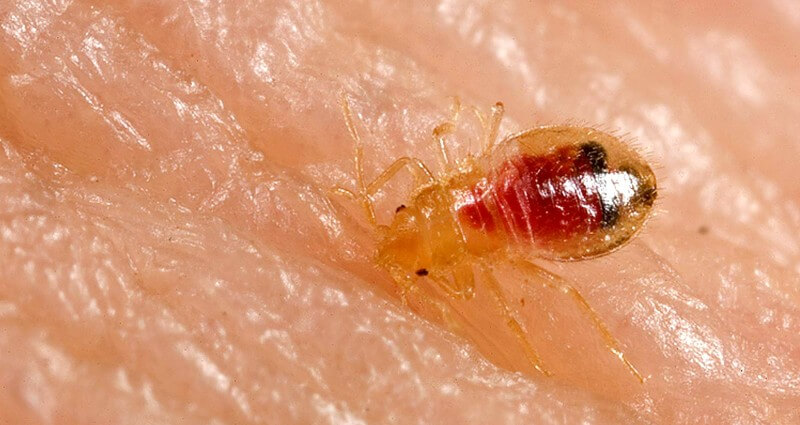
Bed bug work is unforgiving in a way that most pest control is not. There is no partial credit. A treatment that kills 98 percent of a population and misses a few dozen cemented eggs behind a headboard has not reduced your problem — it has delayed it by about five weeks, which is roughly how long it takes an egg to become a breeding adult at indoor temperatures. Under laboratory conditions a bed bug population doubles about every thirteen days.
That is why this page is mostly about verification and follow-up rather than about products. The single most useful fact we can give you is the temperature difference between what kills an adult and what kills an egg, because every failed heat job in the country lives in that gap. If you also need to know whether a room, a floor or a building has bed bugs at all — before a lease turns over, after a guest complaint, or to clear a unit — that is a detection question, and our certified K-9 bed bug detection teams answer it. This page is the treatment.
What temperature actually kills bed bugs?
This is the technical core of the page and the number most protocols get wrong.
The controlled study is Kells and Goblirsch, published in Insects in 2011, and its method matters: the researchers used a slow temperature ramp deliberately simulating how a real room heats, rather than plunging insects into hot air. Step-function studies produce lower apparent lethal temperatures — which is exactly why lab numbers and field practice differ.
| Adults | Eggs | |
|---|---|---|
| Immediate lethal temperature | 48.3°C / 118.9°F | 54.8°C / 130.6°F |
| Sustained exposure at 113°F | ~95 minutes | ~428 minutes (7.1 hours) |
| Sustained exposure at 118.4°F | — | 71.5 minutes |
The authors' own recommendation for whole-room work is to hold 48°C (118.4°F) for 71.5 minutes, or to exceed 50°C (122°F). Virginia Tech's field guidance puts it at 118°F for 90 minutes for 100 percent egg mortality. The egg is the limiting factor. Any protocol built around the adult number fails, and it fails invisibly — the room looks clear for a month.
That is also why a field ambient target is typically around 135°F rather than 118°F. Ambient air temperature is not harborage temperature. Remote sensors go into cracks, crevices and the coldest anticipated locations to confirm those spots actually exceed the thermal death point, the heat is held at least sixty minutes past that, and a full job runs six to eight hours from setup to takedown.
Why do heat treatments fail?
Five documented reasons, and we would rather you know them before you buy heat from anyone, including us.
- Heat sinks in older and remodeled buildings. Virginia Tech specifically flags that some structures — usually older remodeled buildings — have construction features that create heat sinks, and recommends supplemental insecticide in those areas. That describes a great deal of the housing stock in Aiken, Graniteville, Augusta and Columbia's older neighborhoods.
- Thermal mass. Wall cavities, box spring interiors, stuffed furniture, book stacks and a heavy dresser pushed against an exterior wall all lag behind ambient air. Insulated items need extra time to equilibrate. A room can read 135°F while the core of a mattress is still well under lethal.
- Bugs fleeing the gradient. This is no longer speculation. A 2024 paper in Scientific Reports found bed bugs release an alarm pheromone starting around 42°C — a temperature 83 percent of them survive — and that nearby bugs respond with frantic, rapid, directional movement. The authors warn directly that this may let insects relocate to thermally protected areas before lethal temperatures are reached. The countermeasure is air movement to flatten the gradient, plus a residual perimeter so anything fleeing a treated void crosses something that kills it.
- No residual, at all. Virginia Tech states it plainly: heat treatment has no residual activity, which means bed bugs can reinfest the day after treatment. In an apartment building with an untreated neighbor, that is not hypothetical.
- Sublethal heat is not control. Exposure in the 34 to 40°C range produces variable mortality and depresses fecundity for weeks. That is a real effect, and it is not a reason to call an underperforming heat job a success. We will not tell you it “still worked.”
The honest counterweight: bed bugs show very limited ability to evolve heat resistance — laboratory selection experiments plateaued after the fourth generation. Heat is not a resistance-selecting tool, and that is a genuine advantage over chemistry that no amount of resistance in the population can erode.
Why do store-bought sprays make it worse?
Two separate mechanisms, both documented, and both working against you at once.
Resistance. A 2010 study screened 110 US bed bug populations and found 88 percent carried target-site knockdown-resistance mutations in the sodium channel — V419L, L925I, or both. A single Richmond field strain sequenced in PLOS ONE showed roughly 5,200-fold resistance to deltamethrin and 111-fold to beta-cyfluthrin, driven by the kdr mutation plus multiple upregulated cytochrome P450s, carboxylesterases and a glutathione S-transferase — several independent mechanisms coexisting in one population. Some strains have also thickened their cuticle, slowing penetration.
The workaround chemistry is under pressure too. Romero and Anderson's 2016 study in the Journal of Medical Entomology measured neonicotinoid resistance ratios in field populations reaching 33,333-fold for acetamiprid, with hundreds-fold ratios for thiamethoxam, imidacloprid and dinotefuran. Resistance is population-specific — a Jersey City population remained susceptible to imidacloprid — which is precisely why a one-size-fits-all chemical protocol is inadequate.
Behavioral avoidance and dispersal. A 2009 study in the same journal found three of four bed bug strains significantly avoided deltamethrin-treated harborages and preferred untreated ones, and that sublethal contact increased locomotor activity — 58 percent of one strain was left wandering with poisoning symptoms rather than dying. Chlorfenapyr produced no such avoidance. What that means in a bedroom is that spraying a pyrethroid at the bed drives bugs out of the bed and into baseboards, adjoining rooms and, in an apartment, the neighbors — while killing very few of them. The same study found bugs would cross treated barriers to reach a heat source and feed, so pyrethroid “barriers” are not reliable either.
What actually works
Inspection that takes real time
The Rutgers program that achieved 92 percent elimination averaged 102 minutes per apartment for the initial inspection alone. Mattress and box spring seams, bed frame joints, headboard backs, nightstands, upholstered furniture seams, behind molding, loose wallpaper, cracks in hardwood, and in heavy infestations outlets and wall-to-ceiling junctions. A bed bug harbors in a crevice no wider than a toothpick, so the inspection is slow by necessity.
Interceptors under every leg
Passive pitfall monitors under bed and furniture legs are the highest-value tool in the entire job and they cost almost nothing. In systematic inspections of 2,372 apartments, brief visual inspection detected 72 percent of infestations while interceptors detected 89 percent — and about 49 percent of detected infestations were in units where the resident had no idea. Rutgers recommends 8 to 12 traps for a one-bedroom apartment, checked every one to two weeks. They stay down through the whole program and after it.
Encasements on the mattress and box spring
An encasement does not kill anything by itself. What it does is permanently remove the two largest harborages from play, turn the mattress into a smooth inspectable surface, and make throwing the bed away unnecessary. It has to stay on and stay intact — starvation inside a sealed encasement takes months at indoor temperatures, not weeks, and cheap vinyl tears.
Steam, correctly
Target 160 to 180°F at the surface, moving at 10 to 30 seconds per linear foot, with a triangular upholstery nozzle — a bare high-pressure nozzle blows live bugs off the surface and scatters them. Penetration is limited: roughly two and a half inches into a crack, less than an inch through fabric. Published data shows 100 percent egg mortality and 88 to 94 percent nymph and adult mortality. Steam goes first and dust goes after, once dry, because moisture measurably degrades dust performance.
Silica gel — not diatomaceous earth
A 2016 study in the Journal of Economic Entomology tested eight dusts three ways. In the discriminating assay — bugs briefly crossing a one-inch treated band — silica gel produced 100 percent mortality and every one of the other seven products, including 100 percent diatomaceous earth, produced 65 percent or less. Silica gel also transferred between insects, killing unexposed bugs at high rates; DE showed no comparable effect. The EPA notes bed bugs cannot become resistant to desiccants the way they do to other modes of action. Label rate matters, and pool-grade or food-grade DE carries a respiratory hazard the EPA warns about.
Heat and targeted residual together
Whole-room heat kills every life stage including eggs in a single session and penetrates furniture and mattress cores that no spray reaches. It has no residual. Targeted residual and dust give you the residual heat cannot. Rotating modes of action — and not repeating a pyrethroid that visibly failed — is the resistance answer. A field trial of a pyrethroid-plus-neonicotinoid combination produced a 98 percent reduction against 23 percent in untreated controls; chlorfenapyr has been shown effective across strains regardless of pyrethroid susceptibility.
HEPA vacuuming, including after the bugs are dead
Vacuuming quickly removes live and dead bugs and shed skins, though it cannot remove cemented eggs or bugs deep in cracks. Bags get sealed immediately and disposed of outside. There is a second reason to vacuum that most companies never mention: dust in infested homes carried an average of 54.6 micrograms of histamine per 100 mg, against under 2.5 in uninfested units in the same building — and a 2018 study found heat treatment that eradicated the bugs did not reduce histamine even three months later. Histamine is thermally stable. Physically removing the dust is the only thing that reduces it.
Follow-up on a two-week cadence, and a real clearance standard
Egg incubation runs five to ten days and egg-to-adult about 35 to 40 days at normal indoor temperature, which is exactly why a two-week recheck interval is correct and a six-week clean window is the right clearance standard. See the next section.
How many visits does it really take?
More than one, and we would rather say so up front than sell you a number we cannot hit.
Two peer-reviewed field programs give the honest answer. Cooper, Wang and Singh's community-wide program across four high-rise buildings and 358 apartments used biweekly service visits until elimination criteria were met, averaged seven service visits per successfully treated unit, and defined elimination as no bed bugs by interceptor catch, visual inspection and resident feedback across three consecutive visits spanning 42 days. The result was 92 percent elimination among treated apartments, a 98 percent reduction in mean counts, and a drop in building infestation rate from 15 percent to 2.2 percent over twelve months. A 2017 threshold-based study in Insects ran biweekly monitoring and treatment for up to 28 weeks, achieving 86 to 100 percent elimination depending on infestation level and method.
So when someone quotes you a one-visit guarantee, the question worth asking is what their clearance standard is. Ours is three consecutive clean checks over 42 days, with interceptors down the whole time. That is the standard the literature validated, and it is the one we hold ourselves to.
What does not work
- Bug bombs. A 2012 study in the Journal of Economic Entomology tested three over-the-counter foggers against five field-collected populations and one susceptible lab strain. Field populations showed minimal mortality across all three products even after two hours of direct exposure. Only the susceptible lab strain approached full mortality, and only when it had no harborage available at all. The authors concluded foggers should not be recommended for bed bugs — no residual effect, and minimal if any penetration into typical harborage. Rutgers documents a case of nine foggers deployed in a single studio apartment with complete failure. The EPA also warns foggers carry fire and explosion risk.
- Ultrasonic devices. Four commercial units tested in a 2012 study showed no significant difference in bed bug distribution against a no-sound control — neither repelled nor attracted.
- “Natural” and essential-oil sprays. Rutgers researchers screened eleven products; only two exceeded 90 percent mortality, and only by direct spray on a visible insect. In the residual choice test — the realistic scenario, where bugs are hidden — the two best performers produced 1.7 percent and 10.0 percent mortality at ten days, against 90 percent for a conventional product under the same conditions. They also have little to no effect on eggs. A contact spray for a bug you can already see is the least useful moment in a bed bug job.
- Diatomaceous earth on its own, moth balls, and rubbing alcohol. DE: 65 percent or less in the discriminating assay. Moth balls: under 50 percent of adults after a week, no effect on eggs. Rubbing alcohol: 50 percent maximum, and Rutgers explicitly recommends against it because the fire risk outweighs the minimal benefit. That is not theoretical — there are documented apartment fires started by people trying to kill bed bugs with alcohol.
- Moving to the couch or the spare room. The most important “don't” on this page. Bed bugs follow host carbon dioxide and survive months without feeding. Moving where you sleep moves the infestation through the house. Keep sleeping in the treated, encased bed with interceptors under the legs — it keeps the population concentrated where it can be killed and measured.
How long can bed bugs survive without feeding?
Not a year, in your house. This is the most commonly misstated fact in the industry and it matters, because it is the basis for the worst advice people act on: “just move out for a while.”
A controlled starvation study at about 79°F measured mean survival by stage and strain. Susceptible strains ran roughly 90 to 128 days for later instars and adults. Pyrethroid-resistant strains — which is most modern field populations — died significantly faster, in the range of 28 to 73 days. The practical read is that at normal indoor temperatures, most stages die in roughly one to four months, with resistant field populations at the shorter end.
The “a year” figure comes from cold. University of Kentucky's guidance is one to four months in temperature-controlled buildings, but potentially a year or more at 55°F or below — an unheated vacant structure, a storage unit, an unconditioned outbuilding. So the answer to “can I just move out for a month and starve them?” is no, and vacating also redistributes them to wherever you go.
Do bed bugs spread disease?
No. The CDC's position is direct: bed bugs are not known to spread diseases to people. The documented effects are itching, sleep loss, occasional allergic reactions, secondary skin infection from scratching, and real anxiety and insomnia.
You will sometimes see a claim that bed bugs have been “implicated in 41 human diseases.” That is a historical association statement from older literature, not evidence of vector competence, and it should not be paraphrased as “they spread forty diseases.” There is laboratory work on Trypanosoma cruzi in bed bugs, and no epidemiological evidence of natural transmission to people. We will give you the CDC's answer, because it is the accurate one.
What is worth taking seriously is the psychological and financial cost, and the histamine residue described above. This is a pest that costs people sleep, dignity and money, and it deserves to be treated properly rather than dramatized.
How do you prepare for treatment?
Less than you have probably been told, and different depending on the method.
Before whole-room heat, these come out: pressurized and aerosol containers of any kind, including propane cylinders, butane lighters, spray paint and fire extinguishers; all pets, including fish and reptiles; all live plants; medications, vitamins and supplements; meltables such as candles, crayons, chocolate, cosmetics and vinyl records; flammables and solvents; firearms and live ammunition; and temperature-sensitive valuables such as oil paintings, glued wooden instruments, photographs and some antiques and veneers. Battery-powered devices, particularly lithium-ion, come out too.
What stays: furniture and clothing. Those are exactly the harborages the heat is meant to reach, and removing them removes the point of the treatment. That is the key difference from conventional prep, and it is the instruction people most often get backwards.
What not to do, in any scenario:
- Do not bag up belongings and move them to another room, a car, a storage unit or a relative's house. Measured dispersal data shows marked bugs turning up in units neighboring five of six release apartments, with 92 percent of the adults that dispersed being female — and one mated female can found an entire new infestation. Moving your things is how one room becomes the whole house.
- Do not throw out the mattress or box spring before treatment. Encasement preserves it, removes the harborage and makes it inspectable. Dragging an infested mattress through a hallway spreads bugs to every unit it passes. If something genuinely must go, the EPA's guidance is to slash the covers, remove the stuffing so it cannot be scavenged, mark it clearly, and arrange prompt pickup.
- Do not spray over-the-counter pyrethroids before or between our visits, for both reasons in the resistance section above.
- Do not deep-clean away all the evidence before the inspection. Fecal staining, cast skins and egg locations are the diagnostic data that drives where we treat.
One more thing worth saying to property managers: the Rutgers program that achieved 92 percent elimination in buildings housing elderly and disabled residents did not require residents to prepare their units at all. Staff performed decluttering assistance and supplied bags and laundry tokens. Heavy prep burdens pushed onto residents who physically cannot meet them are unnecessary for success and are a fair-housing exposure besides. A vendor who does the prep is solving a compliance problem, not just a labor one.
What about laundry?
The controlled numbers, from a 2010 study in the Journal of Economic Entomology, differ from the advice you will see most places:
- Wash at 140°F on a 30-minute cycle: 100 percent mortality, all life stages including eggs.
- Wash at 104°F: all adults and nymphs dead — but only 25 percent of eggs.
- Dryer on hot for at least 30 minutes (roughly an eight-pound load): complete mortality, all stages. Ten minutes on hot killed only about 75 percent of nymphs and 85 percent of adults, and a cool cycle killed almost none.
- Dry cleaning: complete mortality, all stages.
Common guidance says ten to twenty minutes in the dryer. The controlled data says ten minutes leaves 15 to 25 percent survivors. Use 30 minutes minimum on high heat. For items that cannot be washed, freezing works but the parameters are strict: 0°F for a minimum of about four days, and most domestic frost-free freezers cycle warmer than that — put a thermometer in yours before trusting it.
Bed bugs in apartments and multifamily housing
Treating one unit while the neighbors go untreated is a documented failure pattern, not an opinion.
A mark-release-recapture study across six apartments and 24 neighboring units recovered marked bugs in units neighboring five of the six release apartments within about two weeks, with movement of at least 2.5 metres from the sleeping area within units and some bugs crossing hallways more than twelve metres. Ninety-two percent of the adults that dispersed to neighboring units were female — already mated, and individually capable of starting a new infestation. Estimated populations ran from 2,433 to 14,291 bugs per apartment.
Against that, the building-wide approach produced 92 percent unit-level elimination and dropped the building infestation rate from 15 percent to 2.2 percent in a year. For a property manager in Columbia, Aiken, North Augusta or Augusta, the operational conclusion is that a complaint-driven, unit-by-unit response is a permanent expense and a building-wide program is a finite one. We scope it that way — see our multifamily and property management program.
Senior living deserves a specific mention: 57 percent of pest professionals nationally report treating bed bugs in nursing homes and assisted-care facilities, and the best-documented successful eradication program in the entire literature was run in senior and disabled high-rise housing. See our healthcare and senior living program.
Bed bugs in hotels, inns and short-term rentals
The legal picture in this two-state service area is not symmetrical, and it is worth knowing which side of the river you are on.
South Carolina has no bed-bug-specific statute. The 2024 EPA and NPMA compilation of state bed bug laws contains no entry for South Carolina. A 2013 bill that would have required hotel notice and landlord disclosure died in committee. The Residential Landlord and Tenant Act at § 27-40-440 requires landlords to comply with applicable building and housing codes materially affecting health and safety and to keep premises fit and habitable — but it contains no mention of pests, vermin or extermination, and neither does the tenant obligations section. Responsibility is therefore not statutorily assigned; it turns on the general habitability duty, the adopted local housing code and the lease. We would suggest checking your municipality's adopted property maintenance code rather than assuming.
Georgia has one enforceable rule, and it names bed bugs directly. Georgia Department of Public Health Rule 511-6-2-.13, covering tourist accommodations, requires that “effective and appropriate measures shall be taken to eliminate the presence of rodents and flies, roaches, bed bugs, and other insects on the premises.” The same rule requires restricted-use pesticides be applied only by licensed professionals, limits indoor fogging to licensed professionals operating an IPM program, and requires facilities to retain pesticide use records for at least 18 months documenting product, concentration, date, location, method, target pest and applicator. If you operate lodging in Augusta, Evans or Martinez, that recordkeeping requirement falls on you, and it is one of the things our service documentation is built to satisfy.
On liability generally, the case worth knowing is Mathias v. Accor Economy Lodging, decided by the Seventh Circuit in 2003. A downtown Chicago motel had a bed bug infestation management knew about for years; an exterminator had proposed treating all rooms for $500 and was refused; staff called the bugs “ticks” to avoid alarming guests; and a room marked “DO NOT RENT UNTIL TREATED” was rented anyway. The jury awarded $5,000 compensatory and $186,000 punitive per plaintiff, and the appellate court affirmed on willful and wanton conduct. The exposure was never the cost of treatment. It was the record showing they knew and did not act. Documented inspections and documented remediation are what that record looks like when it goes the other way. See our hotel and hospitality program.
What makes the CSRA and Midlands different?
February through April is our high-transience season, and it is unusual. The Aiken Triple Crown runs three consecutive March weekends — the Aiken Trials at the Historic Aiken Training Track, which draws over 10,000 spectators, the Aiken Spring Steeplechase, and Pacers and Polo at Whitney Polo Field — filling hotels, inns, guest cottages and barn apartments with out-of-state visitors and seasonal residents.
Then the Masters arrives in Augusta in April. The short-term rental surge around it is genuinely large: Masters week 2025 saw roughly $8.5 million in booked short-term rental revenue across April 7 to 13 alone, with more than 16,400 nights booked and an average daily rate of $514 against a normal month closer to $200. April 2024 generated $19.2 million for the month, against a typical Augusta month of $3 to 4 million. Thousands of private homes across Augusta, Evans, Martinez, North Augusta and Aiken become lodging for one week a year, hosting guests with luggage from all over the world — and then go back to being family homes, with none of the routine turnover inspection a hotel performs. The right windows are February and March for preventive inspection, and late April for detection and treatment.
August and January are the student-housing windows. The University of South Carolina's Columbia campus exceeded 40,000 students in fall 2025, including 7,829 new freshmen — the largest freshman class in its history, drawn from all 46 South Carolina counties and beyond. Combine an almost complete annual turnover of on- and off-campus housing with the dispersal data above, and August move-in is the operationally correct time to inspect Five Points, Olympia and Rosewood rentals rather than the correct time to discover a problem.
And a word about the “worst bed bug cities” lists. Neither Columbia nor Augusta appears on the 2025 Orkin ranking. That is not reassuring, because the list is built from one company's treatment volume in metro areas where it performed the most treatments — it measures market share, not incidence. A city served mostly by independent companies ranks low by construction. There is no scientific prevalence survey for South Carolina or the CSRA that we could find, and we are not going to invent one. What systematic inspection finds in multifamily housing generally is 12.3 percent of units infested, ranging from 3.8 to 29.5 percent by building, with about half of those residents unaware.
What is included in a bed bug service
- Full inspection of beds, furniture, harborage and adjoining rooms, with findings photographed
- Species and life-stage assessment, including whether eggs are present
- Mattress and box spring encasements installed on the first visit
- Interceptor monitors under bed and furniture legs, left in place through clearance
- Steam applied at correct surface temperature and dwell, before any dust
- Silica gel dust into harborage and voids at label rate
- Whole-room heat where the situation calls for it, with remote sensors in the coldest locations
- Targeted residual with rotated modes of action — not a repeated pyrethroid
- HEPA vacuuming, including post-treatment for histamine and debris removal
- Biweekly follow-up until three consecutive clean checks over 42 days
- Written documentation suitable for a landlord, an insurer or a Georgia tourist-accommodation record
Where we work
Coastal K-9 & Pest Solutions is based in Windsor, South Carolina, and treats bed bugs across Aiken, North Augusta, Graniteville, Vaucluse, Warrenville, Beech Island, Edgefield, Columbia, Lexington, West Columbia, Cayce and Irmo, plus Augusta, Evans and Martinez in Georgia — homes, apartments, student rentals, hotels and inns, senior living communities and short-term rentals along the I-20 and I-26 corridors. Our vehicles and technicians can arrive unmarked where discretion matters. See all areas we serve.
Frequently asked questions
Can one treatment get rid of bed bugs?
Occasionally, for a very early, very contained infestation. Usually not. The peer-reviewed field programs that achieved 90 percent-plus elimination used biweekly visits and averaged about seven service visits per unit, with elimination defined as three consecutive clean checks over 42 days. The biology explains why: eggs incubate five to ten days and take 35 to 40 days to reach adulthood, so a two-week recheck interval and a six-week clean window are what the population dynamics require.
Should I throw away my mattress?
Almost never, and not before treatment. An encasement removes the harborage, preserves the mattress and makes it inspectable, and it costs a fraction of a replacement. Dragging an infested mattress through a hallway spreads bugs to every unit it passes, and buying a new one into an untreated room just gives them somewhere new to live. Disposal makes sense only for something like a heavily infested sofa that genuinely cannot be treated economically.
Is heat better than chemicals?
Heat is the strongest single knockdown tool and the only one that reliably kills eggs where they sit — and bed bugs show very limited capacity to evolve resistance to it. But it has zero residual, so reinfestation is possible the day after, and it cannot reach an untreated neighboring unit. Chemicals give residual but face 88 percent kdr resistance across US populations. The defensible answer is both, plus steam, silica gel, encasements and interceptor monitoring, with verification at the end.
Do I have to leave my home during treatment?
For whole-room heat, yes — along with pets, plants, medications, aerosols and anything meltable or flammable — typically for the working day, since a job runs six to eight hours from setup to takedown. For conventional treatment the re-entry interval is much shorter and depends on the products used; we will tell you exactly what it is before we start. What we will ask you not to do is sleep somewhere else afterward.
How did I get bed bugs?
Almost always travel or transported items — luggage, used furniture, a moving box, a guest, a hotel stay, a dorm move-in. It is not a cleanliness issue, and systematic inspections routinely find infestations in units where the resident had no idea. About half of the infestations found in one large apartment survey were in units whose residents did not know. We mention it because the shame around this pest keeps people from calling until the infestation is roughly three times more expensive to treat.
Why do I have bites but you found nothing?
Two possibilities and both are common. Bites are not diagnostic — many things bite, and reactions vary enormously between people, with some showing nothing at all. Or the population is genuinely there but very small: brief visual inspection detects about 72 percent of real infestations, while interceptors detect 89 percent over time. If we find nothing, we leave interceptors down and check again rather than declaring the room clear, and where certainty matters we can bring in a K-9 detection team.
Are the essential-oil products worth trying?
Not for a real infestation. Rutgers researchers screened eleven; only two exceeded 90 percent mortality, and only by directly spraying a bug you can already see. In the realistic test — residual, with bugs able to avoid treated surfaces — the best products produced 1.7 and 10 percent mortality at ten days. They also have little to no effect on eggs. If you want a non-chemical component that is actually supported, it is silica gel, steam, encasements and heat.
What is the difference between this and your K-9 bed bug detection?
Different questions. This page is treatment: kill the population, verify it is gone. K-9 detection answers whether bed bugs are present at all, and where — a point-in-time confirmation before a lease turns over, after a guest complaint, across a floor of rooms, or to clear a unit. Interceptors are the passive, weeks-long version of the same question. Most residential customers need treatment; hotels, property managers and anyone facing a dispute usually want both.
Do you work with landlords and tenants?
Yes, and we will document what we find and what we did for either side. South Carolina has no bed-bug-specific statute, so responsibility between landlord and tenant turns on the habitability duty, the local housing code and the lease — which means written, dated, photographed findings are worth a great deal when there is a disagreement. In Georgia, tourist accommodations have an explicit elimination duty and an 18-month pesticide recordkeeping requirement, and our reporting is built to satisfy it.
Can bed bugs live in a vacant unit for a year?
Only if it is cold. At normal indoor temperatures, controlled starvation studies put most stages at roughly one to four months — and pyrethroid-resistant field strains, which is most of them now, die faster than susceptible ones. The year-plus figure applies at about 55°F or below: an unheated vacant structure, a storage unit, an unconditioned outbuilding. Do not count on vacancy as a treatment.
Related services
Think you have bed bugs? Don't move rooms.
Tell us what you found and where. We will inspect properly, treat the eggs and not just the adults, and keep monitoring until three consecutive checks come back clean. Discreet service for homes, rentals, hotels and senior communities across Aiken, North Augusta, Augusta, Columbia and the Midlands.