
K-9 Rodent Detection for Warehouses & Distribution
A rodent problem in a warehouse is a whole-facility problem. Our detection dogs cover large footprints fast — pinpointing activity that scattered traps and bait stations miss entirely.
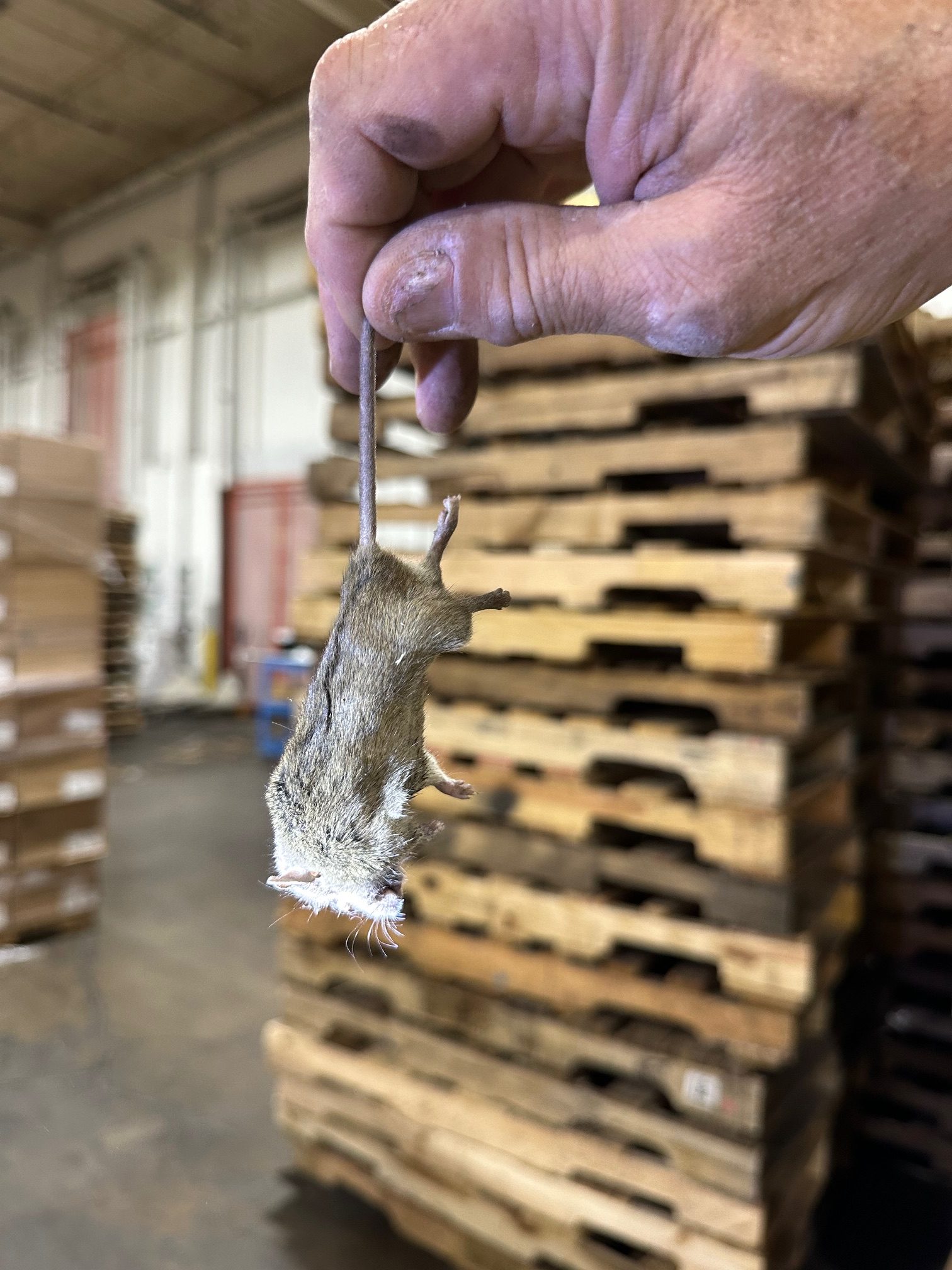
In a warehouse or distribution center, rodents ride in on inbound freight and disappear into racking, palletized product, and structural voids. Across tens of thousands of square feet, a handful of bait stations covers almost none of it. Coastal K-9 & Pest Solutions gives large facilities across the CSRA and Midlands something traps never can: fast, systematic canine detection that pinpoints where rodents are actually active.
Detection-first is the difference between reacting to product damage and preventing it. Instead of waiting for a customer complaint or a failed audit, a detection dog maps activity across your footprint so exclusion and control go exactly where they are needed — and so you can prove a proactive program to every customer and auditor.
In a big facility, traps tell you where rodents died — not where they live
Bait stations and snap traps are reactive and only cover the few feet around them. In a facility measured in acres, that leaves enormous blind spots — and rodents nest in exactly the places traps do not reach: high in racking, deep in palletized product, above suspended ceilings, and inside structural voids and roof lines.
A detection dog systematically clears racking, pallet storage, mezzanines, and structural voids, mapping where rodents are genuinely active. That means your exclusion and control resources go where they will actually matter, and you find a problem while it is small — before it becomes damaged product, a rejected load, or an audit finding.
The pests we detect in warehouse and distribution facilities
Rodents are the primary threat to stored product and audit scores, but distribution environments face several pests we detect and control:
Norway rats
Enter from below through foundations, dock levelers, and utility penetrations. They contaminate product and gnaw wiring, and need only a half-inch gap to get in.
Roof rats & house mice
Climbers and squeezers that nest high in racking and above ceilings. Mice fit through a quarter-inch gap and are the most common stored-product rodent.
Stored-product pests
Indianmeal moths, beetles, and weevils that infest palletized goods. We help identify affected areas so infested stock is isolated quickly.
Birds
Sparrows and pigeons that enter through open dock doors and roost in rafters, fouling product and triggering audit deductions. We provide humane exclusion.
The standards and audits we build your program around
Distribution facilities answer to customers and third-party auditors. Our program is built to protect your contracts and your scores:
- Customer & third-party audits — Retail and food customers require documented pest programs. Audits such as AIB and SQF (for food-grade facilities) scrutinize pest evidence and records closely.
- FSMA & food-grade requirements — For facilities handling food, the Food Safety Modernization Act and food-grade standards demand proactive pest management and documentation. Detection strengthens both.
- Inbound-freight control — Because most facility rodents arrive on incoming product, dock and inbound inspection is a core standard we build into every program.
- OSHA housekeeping & safety — Rodent nesting and droppings are a housekeeping and safety issue. A documented program supports a clean, compliant facility.
How our warehouses and distribution centers K-9 program works
Every warehouse engagement follows a systematic, documented workflow scaled to your footprint:
Assess
We map your facility — racking, storage zones, mezzanines, docks, and utility runs — and review inbound patterns and any current concerns.
Detect
A certified detection dog systematically sweeps the full footprint by scent, covering in hours what would take a technician days to search visually.
Map activity
The handler confirms and maps exactly where rodents are active, so control resources are focused rather than scattered.
Exclude & treat
We seal the dock-door, penetration, and structural gaps rodents use and apply targeted control only where activity is confirmed.
Verify
A follow-up sweep confirms activity is resolved — documented proof for your customers and auditors.
Document & monitor
You receive audit-ready reporting with activity mapping and trends, plus a scheduled monitoring and inbound-inspection cadence.
What our warehouses and distribution centers program includes
- Full-footprint detection across racking, pallet storage, and mezzanines.
- Inbound freight & dock inspection to catch rodents at the point of entry.
- Structural exclusion to seal dock-door, penetration, and roofline gaps.
- Activity mapping so control resources go where they are needed.
- Stored-product pest & bird service for palletized goods and rafters.
- Scheduled monitoring to catch new activity before it spreads.
- Audit-ready documentation for customers and third-party inspections.
- Trend reporting that demonstrates a proactive program over time.
Why canine detection outperforms conventional pest control for warehouses and distribution centers
A few bait stations cannot protect a facility measured in acres. Here is why distribution operations choose detection:
| Bait stations only | Coastal K-9 detection | |
|---|---|---|
| Coverage | Only a few feet around each station | Systematic across the full footprint |
| Finding the source | Reactive, after damage | Pinpoints active harborage by scent |
| Inbound freight | Not addressed | Dock and inbound inspection built in |
| Entry points | Usually missed | Located and sealed with exclusion |
| Time to cover | Days of visual searching | Hours with a certified dog |
| Audit readiness | Sparse records | Activity mapping and trend documentation |
Documentation that protects you
Every sweep is documented — where the dog alerted, what was found, and what exclusion or corrective work followed. That record supports customer audits, third-party inspections such as AIB and SQF, and your own facility standards.
For distribution operations, documentation is not paperwork — it is how you keep a contract. A proactive detection record with activity mapping and trends is exactly what auditors and customers want to see, and it protects you if a load is ever questioned.
Signs your facility needs a detection sweep
In a large facility, early signs are easy to miss until product is damaged. Watch for:
- Droppings in racking, on pallets, or along walls and utility runs.
- Gnawed or contaminated packaging and product damage.
- Sightings on security cameras, especially overnight.
- Grease marks and runways along beams, walls, and dock edges.
- Gaps at dock doors, levelers, and penetrations that invite entry.
- An upcoming customer or third-party audit you want to pass cleanly.
Serving warehouses and distribution centers across the CSRA & Midlands
Coastal K-9 serves warehouses, distribution centers, third-party logistics (3PL), cold storage, and manufacturing-adjacent facilities across the CSRA and Midlands. That includes the industrial and logistics corridors around Aiken, Augusta, Grovetown, and Graniteville along I-20 and I-520, and the Columbia, Lexington, and West Columbia distribution hubs along I-77 and I-26.
As a local, family-owned company we can scale a program to a single building or a multi-site portfolio, with scheduled monitoring and on-demand response when a customer audit or a finding requires fast action.
Why CSRA warehouses and distributors choose Coastal K-9
Distribution operators across the region choose Coastal K-9 because a detection dog covers in an hour what would take a technician a full day to search by eye — and finds what the eye misses. That speed and accuracy protect your product, your contracts, and your audit scores.
Our founder is FEMA-trained and NESDCA-certified, we are local and responsive, and every inspection is detection-first — so control is targeted, documented, and cost-effective across even the largest footprints.
Frequently asked questions
How can a dog cover such a large facility?
A trained detection dog systematically works racking, storage, and structural voids far faster than a person searching by eye — often clearing in hours what would take a technician days, and finding hidden activity a visual check misses.
Can you check inbound freight?
Yes. Dock and inbound-freight inspection is a core part of a warehouse program, since rodents most often arrive on incoming product and pallets.
Do you seal entry points too?
Yes. Detection is paired with structural exclusion — sealing dock-door, leveler, penetration, and roofline gaps — so the fix is lasting, not temporary.
Can you support our AIB or SQF audit?
Absolutely. Every inspection is documented with activity mapping, corrective work, and trends, giving you audit-ready records for AIB, SQF, customer, and third-party inspections.
How much does warehouse pest detection cost?
It scales with facility size and monitoring frequency, but detection-first is highly cost-effective against the price of damaged product, a rejected load, or a failed audit. Call 803-226-3155 for a facility quote.
How often should we schedule?
Most facilities do best with scheduled monthly or quarterly monitoring plus pre-audit sweeps and inbound inspection, sized to throughput and audit cycle.
Do you handle stored-product pests and birds?
Yes. Beyond rodents we help identify stored-product pest activity in palletized goods and provide humane bird exclusion for dock and rafter areas.
How do the dogs find rodents in stored product?
They alert to the scent of live rodents, urine, and nesting material, locating harborage deep in racking and product that a visual inspection cannot reach.
Will detection disrupt operations?
Minimal disruption. We schedule around your operation, including off-shift, and a dog moves through the facility efficiently and safely.
Do you provide trend documentation over time?
Yes. Recurring programs include trend reporting that demonstrates a proactive, improving pest program — exactly what customers and auditors look for.
How quickly can you respond to a finding?
We offer same-week response across the CSRA and prioritize active findings and upcoming audits.
What areas do you serve?
Warehouses and distribution facilities across Aiken, Augusta, Grovetown, Graniteville, Columbia, Lexington, and the greater CSRA and Midlands.
Related commercial programs
Cover the whole facility — not just where the traps are.
Schedule large-footprint K-9 rodent detection and inbound inspection across the CSRA.
Operating across multiple sites? See our multi-site rodent detection programs.