
COASTAL K9 PEST SOLUTIONS
Detection Before Treatment. Every Time.
People ask about the dog. The nose. The training. How you find one, how long it takes to build one,
and what it’s actually capable of. These are the real answers — from someone who has lived this
work.
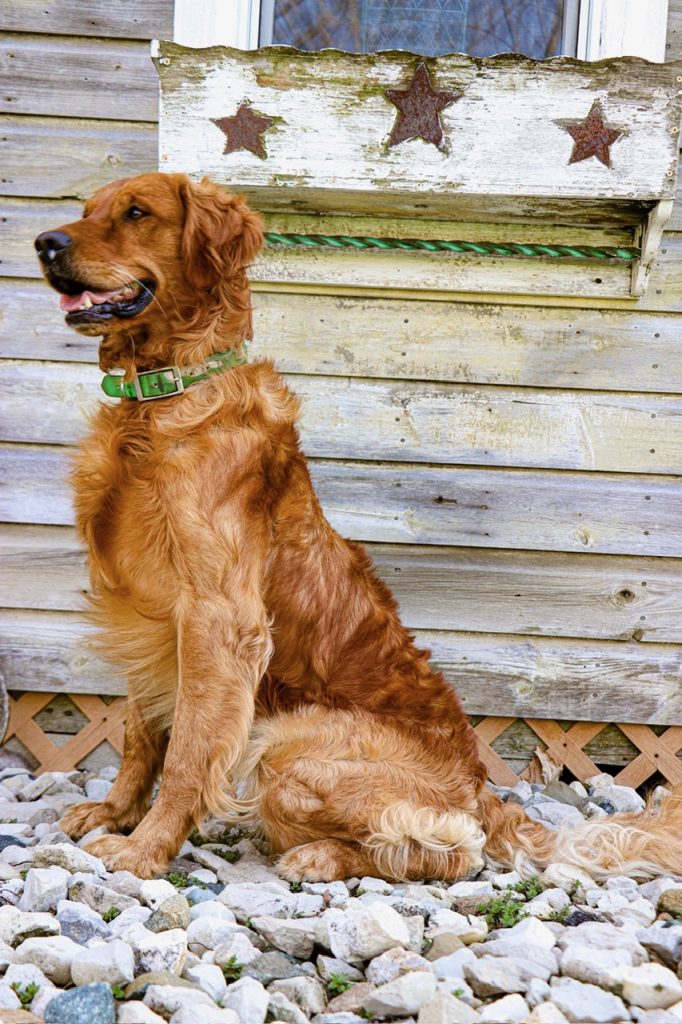
- What makes a good detection dog?
The short answer is drive — but drive without structure is just chaos, so the longer answer is
more useful.
A good detection dog has three things working together: hunt drive, retrieve drive, and the
capacity to work independently under pressure. Hunt drive is the compulsion to seek. A dog that
cannot turn off the need to find something — that will work a room, work a vehicle, work a
structure relentlessly until it locates the source of a scent — is a dog worth training. Retrieve
drive is what makes the reward system work. Detection training is built on odor obedience: the
dog finds the target scent and is rewarded, usually through a toy or a play session rather than
food, because the reward has to be worth working for. A dog that is indifferent to its reward
cannot be trained to a high standard.
The third element — the ability to work independently — is what separates a good detection dog
from a dog that is good in training and unreliable in the field. In a real inspection environment,
the dog is working novel spaces with novel distractions: new smells, new floor surfaces, new
furniture configurations, sometimes people moving in the background, sometimes other animals.
The dog has to stay on task. It has to work the odor and communicate the find even when the
environment is complicated and the handler isn’t directing every step.
Confidence matters. A dog that is spooked by new environments, startled by loud noises, or
intimidated by unusual surfaces will not perform consistently in the field. Environmental stability
— the ability to remain focused and working in novel, unpredictable conditions — is a non-
negotiable trait in a field detection dog.
What does not matter: size, breed purity, or appearance. Some of the most effective detection
dogs working today came out of shelters. What matters is the nose, the drive, and the stability to
use both reliably under real-world conditions. - What breeds make the best detection dogs and does breed matter?
Breed is a starting point, not a guarantee. Plenty of people have washed out purpose-bred dogs
from working lines, and plenty of shelter dogs have gone on to outstanding detection careers.
What you are selecting for is individual trait expression — drive, focus, stability, hunt — not a
registration paper.
That said, certain breeds produce these traits with enough consistency that they dominate
working detection programs. Belgian Malinois are the most widely used in high-demand
detection and apprehension work — they are intense, fast, durable, and almost pathologically
motivated. German Shepherds have a longer working history in detection and bring slightly
more handler focus and a more manageable temperament for civilian programs. Labrador and
Golden Retrievers dominate scent detection programs outside of law enforcement — they are
biddable, socially easy, and have exceptional noses with a retrieve drive that makes reward
mechanics straightforward. Beagles are outstanding for low-impact, high-precision odor work in
controlled environments. Dutch Shepherds, Springer Spaniels, and Border Collies show up
regularly in specialty detection programs.
For bed bug and pest detection specifically, the work environment matters in the selection. The
dog needs to be comfortable in tight spaces, on unfamiliar furniture, in hotel rooms and
apartment units with residents present, in commercial buildings with equipment and noise. A
dog that is too intense, too reactive, or too large to work efficiently in a furnished bedroom is the
wrong dog for the job regardless of its nose.
Drive and stability. Environment suitability. Individual assessment. In that order. Breed is
context, not conclusion.
- Have you selected a detection dog from a puppy?
Yes — and it is a different process from selecting an adult dog, with a longer timeline and a
higher tolerance for uncertainty.
Puppy selection for detection work starts at seven to eight weeks with a structured temperament
evaluation. You are not testing what the puppy knows — you are testing what it is. Prey drive
observation: does the puppy chase and grab a rag or a toy without hesitation? Does it carry it
and resist giving it up? Environmental response: does the puppy recover quickly from a sudden
noise or an unfamiliar surface, or does it shut down and avoid? Social engagement: does the
puppy push back into human contact or disengage? Persistence: does the puppy keep working
at a problem when the immediate solution isn’t obvious?
A puppy that shows strong prey drive, fast recovery, and persistent engagement at seven
weeks is a puppy worth investing in. A puppy that avoids, freezes, or disengages under mild
pressure at that age is showing you something that training will not fix.
The trade-off with puppies is time. A puppy selected at eight weeks will not be working in the
field for eighteen months to two years minimum — often longer if the training program is built
correctly. You are investing in potential. There is no shortcut to knowing whether that potential
fully develops until the dog is working under real field conditions. Puppies wash out. Good
puppies with good selection behind them wash out less often, but the honest answer is that no
puppy evaluation is a guarantee.
What puppy selection gives you is the ability to shape the dog from the beginning — build the
foundation the way you want it built, develop the relationship from day one, and control the
socialization and environmental exposure that will determine how the dog performs in novel
working conditions years later. - How do you select a detection dog candidate from an animal shelter?
Shelter selection is harder than puppy selection in some ways and more efficient in others. You
are evaluating a dog that already has a history — you just don’t know most of it. What you can
assess is what’s in front of you, and the evaluation has to be rigorous because the stakes on
both ends are real.
Start with environmental observation before you ever touch the dog. How does the dog present
in the kennel environment? Does it engage with activity and movement around it, or does it shut
down, pace, or react with fear or aggression? A dog that is mentally checked out in a shelter
kennel may simply be stressed — that’s normal. A dog that is fractured, aggressive toward
handlers, or completely disengaged from its environment is showing you something harder to
work past.
The critical assessment is the prey and hunt drive evaluation. Bring a tug toy or a rag into the
interaction. Does the dog engage immediately and with intensity? Does it carry, grip, chase, and
resist giving it up? This is the single most predictive behavior for detection suitability. A dog with
no toy drive in a shelter assessment is almost certainly not a detection candidate regardless of
how appealing everything else looks.
Environmental recovery is the second major assessment. Take the dog to a new space —
outside the kennel, unfamiliar floor surfaces, an environment with novel stimuli. Does it explore
confidently and return to engagement, or does it shut down and seek to exit? A detection dog
has to work in new environments every single day. A dog that cannot recover from novelty in an
assessment is not going to perform in a hotel room it’s never been in before.
Age matters for shelter candidates. Dogs between one and three years are the sweet spot —
past the chaos of adolescence, still physically sound, still able to build a strong working
relationship with a handler. Older dogs can work, but the training timeline compresses and the
physical career is shorter.
The shelter does not define the dog. The assessment does. Do the evaluation honestly and let
what you see tell you what’s there.
- How long does it take to train a detection dog?
Longer than most people expect, and shorter than it should be in a lot of programs that cut
corners.
For a dog starting from scratch — whether a puppy or an adult with no prior detection training —
the foundation odor imprinting and reward association phase takes several weeks of daily work.
The dog has to learn that the target odor — bed bug scent, in this case — is the thing that
makes the reward happen. That connection has to be solid, reliable, and generalized across
different environments before you start adding complexity.
From foundation to a dog that can work a real property reliably and alert with consistency, plan
for four to six months of structured training at minimum. That assumes daily sessions,
progressive environmental exposure, regular proofing against novel spaces and distractions,
and — critically — blind testing where the handler does not know where the odor is placed.
Without blind testing built into the training process, you don’t actually know what the dog knows.
You know what it can do when the handler has expectations.
For a dog coming in with some detection background or prior drive development, the timeline
can compress. But compress does not mean rush. The mistakes that produce unreliable field
dogs almost always trace back to a training phase that moved faster than the dog’s
performance justified.
Certification is not the end of the training timeline. It’s a point-in-time assessment of where the
dog and handler are on a specific date. Maintenance training — regular proofing, ongoing blind
testing, recertification on the schedule the certifying body requires — is what keeps a certified
team performing at a certified level. A dog that passed a NESDCA or WDDO evaluation two
years ago and hasn’t been trained to standard since then is not a certified-level team anymore,
whatever the paperwork says.
Training never stops. That’s the only version that works.
- Can a detection dog smell a single bed bug egg?
This is one of the most important questions anyone can ask about K9 bed bug detection — and
the answer is yes, with important context that defines what yes actually means in practice.
A bed bug egg produces volatile organic compounds — scent molecules — as part of its
biological chemistry. Those compounds are present and detectable from the moment the egg is
laid. A dog trained to the full bed bug odor signature, which includes the chemical profile of live
bugs, cast skins, fecal matter, and eggs, can detect the scent of a single egg under the right
conditions.
The right conditions matter. Scent availability is affected by temperature — warmer
environments volatilize scent compounds more readily. Airflow matters — the scent has to travel
from the source to the dog’s nose, and environmental factors like HVAC systems, air movement,
and physical barriers between the egg and the dog affect how much scent reaches the dog and
how efficiently it can locate the source. A single egg in an open, warm, still environment with
good airflow presents more detectable scent than a single egg deep in a mattress seam inside
an encased box spring in an air-conditioned room.
What this means for inspections is that the dog’s ability to detect a single egg is real but not
infinite. The dog is working within the physics of scent dispersion, not above them. A well-
trained dog is the most sensitive detection instrument available for this work — more sensitive
than any current electronic detection technology, and far more sensitive than any human visual
inspection. But sensitive is not the same as omniscient.
What the research does confirm is that trained detection dogs can locate infestations at
population levels that produce no visible evidence whatsoever — before a human inspector
would ever find anything to look at. A single egg, a single nymph, a small cluster of eggs laid the
previous night. That early-stage detection capability is what changes the treatment outcome.
Find it at one egg. Treat it at one location. Verify it’s gone before it becomes ten thousand.
That is the whole argument for K9 detection. Right there. - Why should you hire a handler whose dog is certified — and what does
certification actually mean?
Certification means the dog and handler were evaluated by an independent third party, under
controlled conditions, and met a defined performance standard on that date. It does not mean
the team is infallible. It does not mean the certification is current. And it does not mean all
certifications are equal. What it does mean is that somebody outside the company looked at the
dog and the handler working together and said: this team can do what they claim to do.
Without certification, you have no external verification of anything. You have a company telling
you their dog is trained. You have a marketing claim. You have no way to know whether that
dog was imprinted on bed bug scent last Tuesday, whether the handler has ever worked a
property outside of training scenarios, or whether the alert the dog gave in your hotel room
means anything at all.
Certified teams are accountable to a standard. When something goes wrong — a missed
infestation, a false positive that led to unnecessary treatment, a dispute about whether the
inspection was conducted correctly — certification gives both parties a reference point. What
was the team certified to do? Did they do it? That accountability structure protects the client as
much as it validates the operator.
Hire certified teams. Verify the certification is current. And understand that a certificate hanging
on the wall from three years ago with no recertification on record is not the same thing as a
team that is actively maintaining a certified standard.
- What are the main certifying organizations for canine bed bug and detection
dog programs, and how do they differ?
There are several organizations operating in the K9 detection certification space, and they are
not all equivalent in what they require or what they verify.
NESDCA — the National Entomology Scent Detection Canine Association — is one of the most
widely recognized certifying bodies specifically for entomology detection dogs, including bed
bug, termite, and other pest-related programs. NESDCA evaluations assess both the dog and
the handler, require controlled odor detection testing, and mandate recertification on a defined
schedule. It is considered a credible and rigorous standard in the pest control industry.
WDDO — the Working Dog Detecting Organization — is another recognized certifying body with
established evaluation protocols for detection dog teams across multiple odor disciplines.
WDDO certifications carry industry recognition and involve structured testing of both detection
accuracy and handler control.
CPDA — the Certified Professional Dog Handlers Association — focuses on the handler side of
the equation as much as the dog, recognizing that handler skill is the variable most responsible
for field performance. CPDA credentialing evaluates professional standards, ethics, and
practical competency in working dog programs.
ICRWDA — the International Canine Research and Working Dog Association — operates
across a broader range of working dog disciplines and provides certification and research
support for handler programs.
There are also newer and smaller organizations entering the space as K9 detection has grown.
Some are rigorous. Some exist primarily to generate certificates. The question to ask about any
certifying body is: what does the evaluation actually test, who administers it, and does the
organization require ongoing recertification or does a one-time certificate stand indefinitely? A
certification that never expires and requires no recertification is a credential, not a performance
standard.
Know who issued the certificate. Know what the evaluation required. Know when it was last
renewed. - Should you ask to see credentials, insurance, and certification before hiring
a canine bed bug or detection dog team?
Yes. Every time. Before you sign anything and before the dog sets foot on your property.
This is not about distrust. It is about accountability — yours as the property owner or manager,
and theirs as the service provider. A professional team will have no hesitation producing these
documents. A team that hedges, deflects, or tells you the credentials are on file somewhere you
can’t see them is telling you something important.
What to ask for specifically:
The dog’s current certification from a recognized certifying body — NESDCA, WDDO, CPDA,
ICRWDA — with the date of issue and the date of last renewal. If the certification is more than a
year old with no renewal on record, ask why. Recertification requirements exist for a reason.
The handler’s personal certification. The dog and the handler are separate. A certified dog with
an uncertified or undertrained handler is not a certified team. Some companies certify the dog
and consider that sufficient. It isn’t.
Proof of general liability insurance with coverage appropriate to the work being performed. If the
dog damages property, if an alert leads to a treatment recommendation that proves incorrect, if
someone is injured during the inspection — who is responsible and what does the coverage
look like? Ask for a certificate of insurance, not a verbal assurance.
State pest control business licensing, where applicable. In many states, canine detection
services must operate under or in conjunction with a licensed pest control operator. Know
whether the company is operating legally in your jurisdiction.
Any company that presents itself as a professional detection service should be able to hand you
all of this without being asked twice. If they can’t, that is your answer.
- What is the price range for canine bed bug detection, and what is the price
range for canine rodent detection?
Pricing varies by region, property type, property size, and the experience level of the team —
but there are reasonable ranges that give you a baseline for what professional K9 detection
should cost and what should raise a flag in either direction.
For canine bed bug inspections, residential pricing typically runs between $150 and $400 for a
standard home or apartment unit, depending on size. Hotel rooms and multi-family units
inspected as part of a property-wide program are often priced per unit, ranging from $30 to $75
per room at volume. Standalone commercial inspections — offices, healthcare facilities, senior
living communities — typically run $300 to $600 or more depending on square footage and
complexity. Post-treatment clearance inspections are generally priced similarly to initial
inspections.
For canine rodent detection, pricing reflects the more complex working environment and often
larger properties involved. A standard commercial rodent detection inspection — exterior
perimeter sweep, interior structure, harborage identification — typically runs $400 to $900 for a
mid-size commercial property. Large warehouse, distribution, or food facility inspections can run
$1,000 to $2,500 or more depending on scope, square footage, and whether the program
includes a written report with mapped findings. Ongoing program pricing — monthly or quarterly
K9 detection as part of a structured IPM contract — is typically negotiated at a reduced per-visit
rate.
Two things to understand about price on either end of the range: a price that seems too low
usually reflects a team that is cutting corners on training, certification, or insurance — and you
bear the risk of that. A price that seems high without a corresponding explanation of what the
program includes — documentation, reports, follow-up protocols, certifications — warrants
questions.
The cost of a K9 inspection is not a line item to minimize. It is the investment that determines
whether everything that follows — treatment, exclusion, verification — is based on real data or a
guess. Price it accordingly.
Coastal K9 Pest Solutions | Aiken/Windsor, South Carolina
NESDCA | CPDA | WDDO | ICRWDA Certified
They see what we can’t. The nose finds it first.